Industry: B2B eCommerce, Hardware & Data Storage
Scope: Technical SEO, keyword strategy, content, backlinks
The Business
A B2B hardware retailer with over 450,000 products, specializing in internal and external hard drives, SSDs, and related storage hardware. Customers are enterprises, IT professionals, and resellers who need reliable technology at scale.
The Problem
A catalog this size should be a massive SEO advantage. Instead, it was working against the site.
Broken site hierarchy meant products weren’t organized in any way that helped users or search engines navigate the catalog. Duplicate content across similar product variations was splitting ranking signals. Keyword cannibalization meant multiple pages were competing against each other instead of the competition.
At 450,000+ products, none of these problems stay small. They compound fast.
The Strategy
The plan started with the foundation, not the content. Fixing technical issues at this scale came first, because no keyword strategy works on a site Google can’t crawl or understand properly.
From there, the focus shifted to relevance over volume. Instead of chasing broad, high-competition keywords, we targeted the specific intent behind each product and landing page. And because the buyers here are IT professionals and resellers, not consumers, the content strategy was built specifically around B2B search behavior and sales cycles.
Execution
1. Fixed the technical foundation
We audited the full site structure and found the core issues: broken hierarchy, duplicate content, and cannibalized keywords across hundreds of thousands of pages.
We restructured site hierarchy for clear, logical navigation. Canonical tags resolved duplication. Product pages were reorganized to eliminate cannibalization. We also improved site speed, fixed broken links, ensured mobile-friendliness, and implemented schema markup so search engines could properly interpret the catalog. Crawl errors, redirects, robots.txt, and XML sitemaps were all cleaned up as part of this pass.
2. Built keyword strategy around real intent
Rather than targeting the highest-volume terms, we mapped keywords to actual user intent for each product and category page, covering informational, commercial, and transactional searches. This meant a buyer researching enterprise storage options and a buyer ready to purchase both found pages built for where they were in the decision.
3. Developed a B2B-focused content strategy
We researched industry trends and pain points specific to IT buyers and resellers, then built a content calendar around them, blog posts, case studies, and product guides addressing the problems this audience actually searches for.
Meta descriptions, internal linking, and keyword targeting were refined continuously based on engagement data, not set once and left alone.
4. Tracked performance and adjusted in real time
Custom dashboards in Google Analytics tracked organic traffic and user behavior. Conversion goals measured actual business outcomes, not just traffic. Where user flow reports showed drop-off points, we ran A/B tests to fix them. This let the strategy adjust continuously instead of waiting for a monthly report to catch problems.
The Results
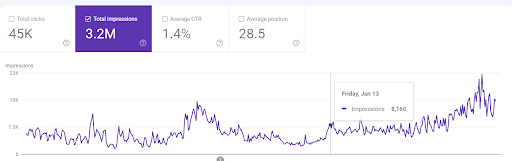
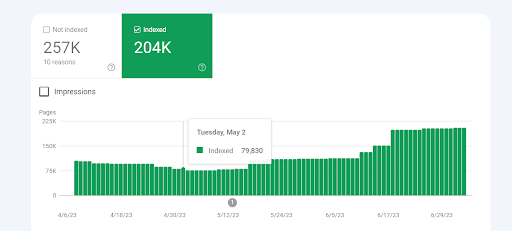
The site’s indexing rate increased from 10% to 50%, a five-fold improvement in how much of the catalog Google could actually find and rank.
Overall search visibility improved by 70%.
Monthly organic users reached 5,000, tracked through SEMrush and Google Search Console.
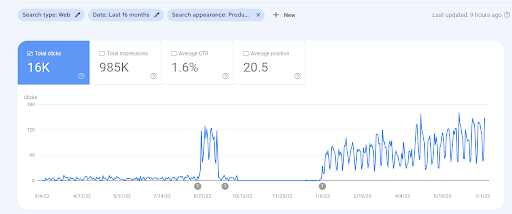
Previously inactive merchant listings were revived, restoring visibility and performance on product feeds that had gone dormant.
Most significantly, these combined efforts contributed to $100,000 in revenue within a single month.
Why This Matters
Indexing rate is the easiest metric to overlook and the most important one here. At 450,000+ products, if Google isn’t indexing most of the catalog, nothing else in the SEO strategy matters. Fixing that first is what made every other gain possible.
The Takeaway
Scale without structure is a liability, not an advantage. This catalog only became a growth engine once the technical foundation, keyword targeting, and content strategy were built to work together instead of fighting the size of the site.